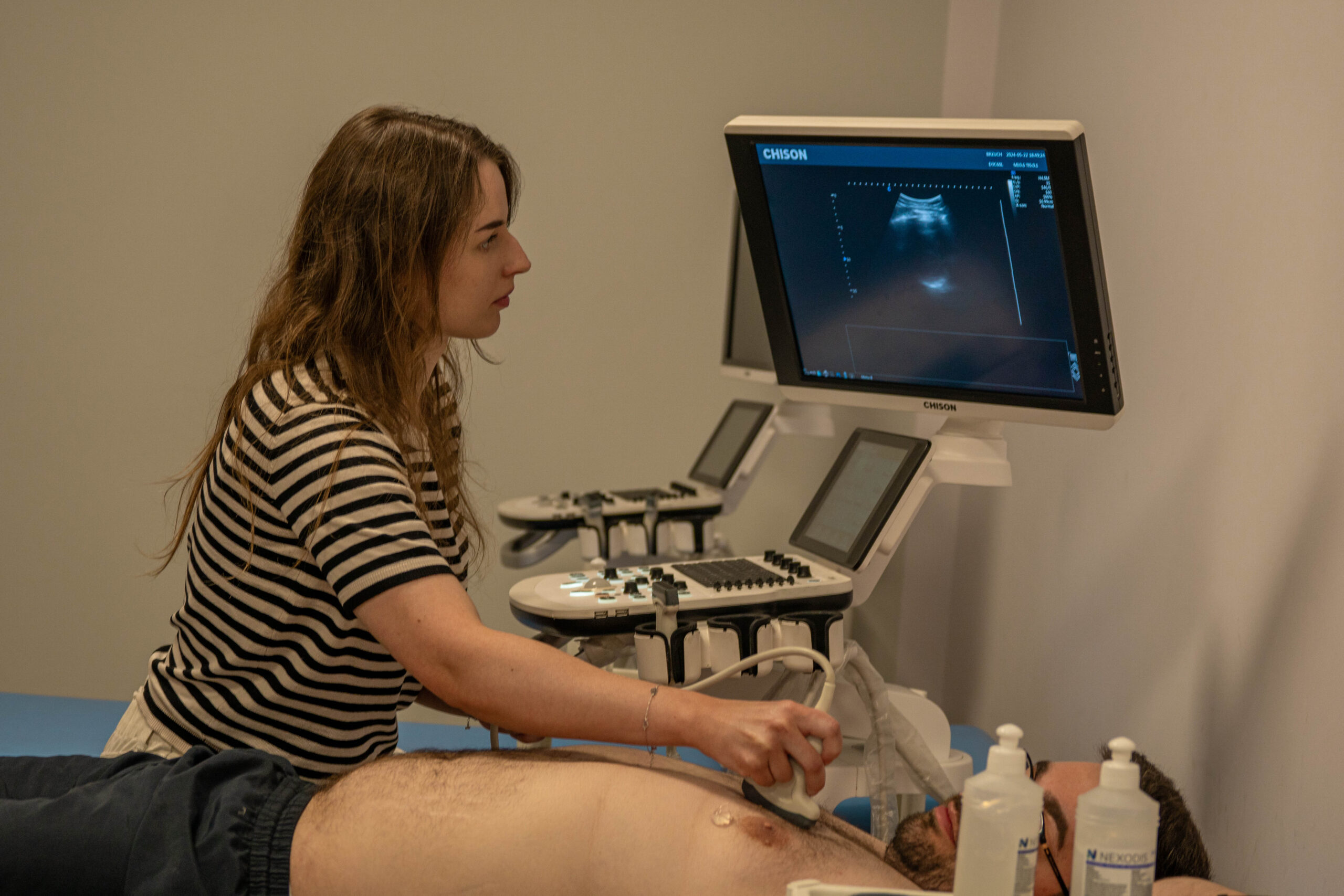
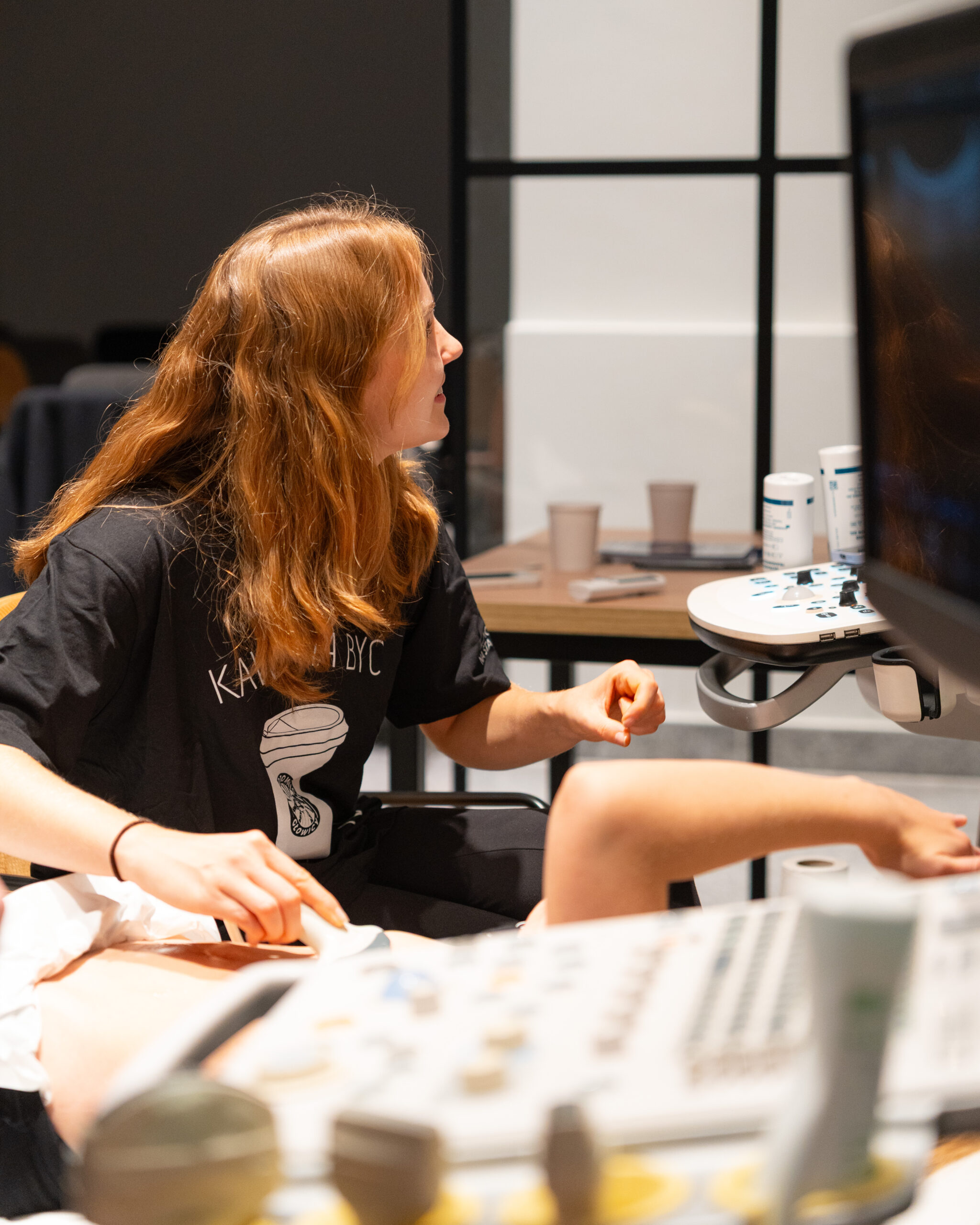
Master one of the most practical and in-demand clinical skills with our comprehensive, hands-on ultrasound course designed specifically for English-speaking medical students. POCUS Essentials is a structured, 5-week program that takes you from the absolute basics to confident bedside application in real clinical scenarios.
This course focuses on point-of-care ultrasonography (POCUS)—a skill increasingly expected from modern clinicians across specialties. Through a combination of concise theory and intensive practical sessions, you will learn how to use ultrasound as a real diagnostic tool, not just understand it passively.
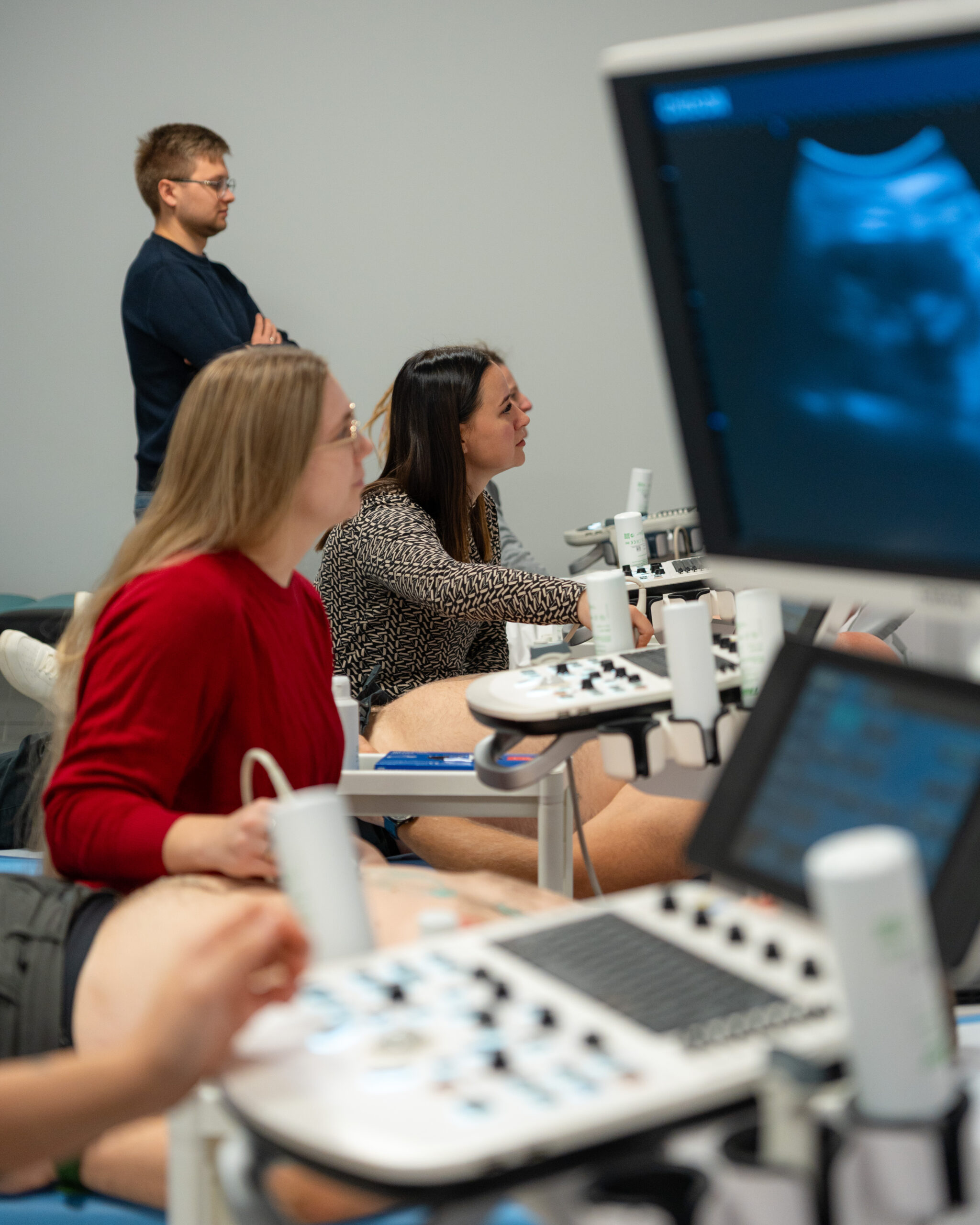
From your very first session, you will work with real ultrasound machines, guided step-by-step by experienced instructors, translating knowledge directly into clinical competence.
What You Will Gain
- Confidence in performing bedside ultrasound examinations
- Ability to recognize key pathologies in emergency settings
- Practical understanding of core POCUS protocols (FAST, BLUE, FATE, RUSH)
- Skills that give you a competitive edge during clinical rotations and future residency
- Hands-on experience that bridges the gap between theory and real-life medicine
Course Structure
Over five interactive Thursday sessions, you will progressively build your ultrasound skills:
Meeting I – Foundations of Ultrasonography
Build a strong foundation in ultrasonography and understand how ultrasound works in clinical practice. You will learn the physical principles of ultrasound, imaging modes, and how to interpret basic images with confidence.
Get familiar with different types of probes and their clinical applications, and develop a practical understanding of basic ultrasonographic anatomy.
You will also be introduced to point-of-care ultrasound (POCUS) and its role in modern medicine, including commonly used protocols. The session concludes with an overview and hands-on practice of the Focused Assessment with Sonography in Trauma (FAST) protocol, allowing you to identify key pathologies in emergency settings.
Meeting II – Lung Ultrasonography (LUS)
Discover how ultrasound can be used to rapidly assess the lungs in emergency and bedside settings. You will learn ultrasonographic anatomy of the lungs and thoracic wall and understand how to interpret key findings.
A major focus will be on ultrasound artifacts—their types, clinical significance, and how they correlate with important conditions such as pneumothorax, pneumonia, pulmonary embolism, pleural effusion, interstitial syndrome, COPD, asthma, and hydrothorax.
You will be introduced to the Bedside Lung Ultrasound in Emergency (BLUE) protocol and the Extended FAST (E-FAST) protocol, followed by hands-on training to reinforce your skills in real-time image acquisition and interpretation.
Meeting III – Basic Echocardiography
Gain practical insight into cardiac ultrasound and build confidence in performing basic echocardiographic examinations. Learn how to obtain standard cardiac views and understand key cardiac projections used in everyday clinical practice.
Develop the ability to assess heart function, including global left ventricular ejection fraction and contractility. You will also learn to recognize life-threatening conditions such as cardiac tamponade, pericardial effusion, and pulmonary embolism.
The session includes an introduction to the Focused Assessment in Transthoracic Echocardiography (FATE) protocol, enabling you to apply a structured approach to cardiac evaluation at the bedside.
Meeting IV – Ultrasound in Shock & Emergency
Learn how to use ultrasound as a rapid diagnostic tool in critically ill patients. This session begins with an overview of shock—its types, mechanisms, and clinical presentation.
You will develop practical skills in assessing the inferior vena cava (IVC) and the abdominal aorta, which are crucial in evaluating hemodynamic status.
The session also introduces the Rapid Ultrasound in Shock (RUSH) protocol, enabling a systematic and efficient approach to diagnosing the cause of shock.
Additionally, you will explore optic nerve sheath diameter (ONSD) measurement as a non-invasive method in the assessment of patients with traumatic brain injury. Practical classes will allow you to integrate all these elements into real clinical scenarios.
Meeting V – Acute Abdomen
Apply your ultrasound skills to one of the most common and high-stakes clinical scenarios—acute abdominal conditions. You will revise the basic ultrasonographic anatomy of abdominal organs and learn how to perform focused examinations.
Develop the ability to diagnose key pathologies, including:
- Abdominal aortic aneurysm (AAA)
- Pancreatitis
- Gallbladder conditions (gallstones, polyps)
- Hydronephrosis and kidney stones
- Urinary bladder assessment
- Appendicitis
You will also learn how to use point-of-care ultrasound in acute abdomen cases to support rapid clinical decision-making. The session is strongly practice-oriented, ensuring you leave with skills you can immediately apply in clinical settings.
Why This Course?
Unlike traditional lectures, this course is highly practical and clinically oriented. You won’t just learn what to look for—you’ll learn how to find it yourself.
- Small-group, hands-on training
- Real clinical cases and scenarios
- Step-by-step guidance from experienced tutors
- Immediate feedback to accelerate your learning
Who Is This Course For?
- English Division medical students (clinical and pre-clinical years)
- Students preparing for clinical rotations
- Anyone who wants to stand out with practical diagnostic skills
Join us and turn ultrasound from a mystery into one of your strongest clinical tools.




 23.05 - 24.05.2026
 Leszno